
Your doctor ordered an MRI and your insurance said no. Here is why MRI requests get denied and what you and your doctor's office can do about it.
Many plans need approval before an MRI. This is called prior authorization. (Triage Cancer) If it's denied, you usually haven't had the scan yet. The insurer has to decide an appeal for care you haven't had within 30 days, and an urgent one generally within 72 hours. (HealthCare.gov, Department of Labor)
Who said no
The letter might come from a company you've never heard of. Many insurers hire outside companies to review imaging requests. One of the biggest, EviCore, makes these decisions for more than 100 insurers, including UnitedHealthcare and Aetna. (ProPublica) Your appeal still goes where your letter tells you to send it.
Why MRIs get denied
Look for the reason on your letter. Two to know about with MRIs:
Try something else first. The American College of Radiology says imaging is generally not needed for plain low back pain that has lasted less than 6 weeks, and that it can be treated first with pain control and physical therapy. (Applied Radiology, on the ACR criteria) In one case Radiology Business reported, a plan wanted an x-ray and physical therapy before it would approve a pelvic MRI. (Radiology Business) If you've already tried other care, make sure your records show it.
The location. Some insurers also review where the scan is done. UnitedHealthcare, for example, started checking whether certain MRI and CT scans planned at a hospital could be done at a freestanding imaging center instead. (AuntMinnie) If that's your reason, ask which imaging centers the plan will approve. That can be the fastest fix.
Call your doctor's office first
The ordering office sent the request, so they are your best help. Ask them:
- Did you get the denial, and what reason did the plan give?
- Can you send more records, or ask for a peer-to-peer? That's when your doctor talks with the insurer's reviewer about the request. (AMA)
- Can you write a letter explaining why I need this MRI now?
File your own appeal too
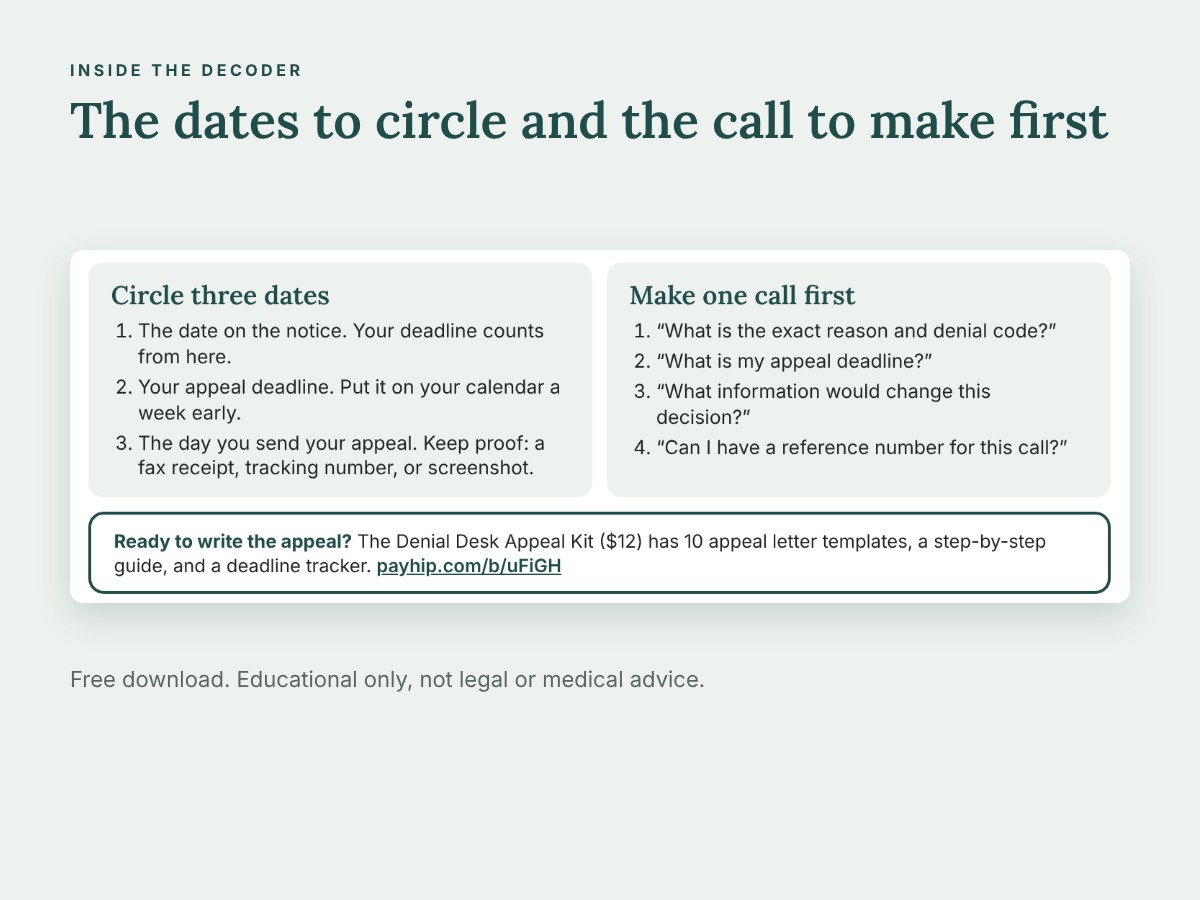
You don't have to wait on the office. You can file an appeal yourself. For job-based plans and plans you buy yourself (like HealthCare.gov), you generally have 180 days after you get the denial notice to file an appeal. Medicare Advantage and Medicare drug plans give 65 days, Medicaid health plans give 60 days, and Original Medicare lists the date on your Medicare Summary Notice. If waiting could seriously harm your health, ask for a fast (expedited) appeal. Your letter has the date that applies to you. (HealthCare.gov) Keep your letter short. Answer the reason they gave, and attach the doctor's letter and records.
If waiting could seriously hurt your health, ask for an urgent appeal, and ask your doctor to say so in writing. If they say no again, you can usually ask for an external review by an independent reviewer. (Triage Cancer)
Tools that help
Start with the free Denial Letter Decoder to find the reason and deadline on your letter. When you're ready to write, the Insurance Denial Appeal Kit has 10 appeal letter templates, including a medical necessity appeal and a letter asking your doctor for support. It also has a tracker to keep your dates straight.
Ready to write your appeal? Read this next: How to Appeal a Health Insurance Denial, Step by Step
This is general educational information, not legal or medical advice. Rules and deadlines vary by plan and state, so always follow the instructions on your own letters and notices. The Denial Desk is not affiliated with any insurer, hospital, or government agency.
AI disclosure: This post was drafted with help from AI tools, then reviewed and fact-checked by a certified medical coding professional.